East Coast Freight Distribution

Moving Freight Smarter: A Sustainable Approach to Queensland Logistics
Sustainability is no longer an optional consideration for Queensland businesses—it is a critical operational standard. From reducing waste and energy consumption to auditing supply chain partners, organizations are under increasing pressure to limit their environmental footprint.
Freight and distribution play a central role in this shift. Transporting goods requires heavy vehicles, fuel, and significant resources. However, achieving sustainable freight does not require radical operational overhauls or unfounded environmental claims. Instead, it relies on practical, data-driven strategies that eliminate empty kilometres and maximize the efficiency of every journey.
What Is Sustainable Freight Transport?
Sustainable freight transport refers to the practice of moving goods across regional and interstate networks efficiently while actively minimizing fuel consumption, vehicle emissions, and operational waste—without compromising delivery speed or service reliability.
Dimension | Traditional Freight Operations | Sustainable Freight Operations |
Route Management | Fixed, static routes regardless of traffic or load | Dynamic route optimization based on live network data |
Capacity & Fill Rates | High occurrence of partial loads and empty return legs | Maximized cubic capacity via consolidated consignments |
Environmental Impact | High fuel burn per tonne-kilometre | Reduced carbon intensity and lower emissions per unit |
Supply Chain Alignment | Isolated transport decisions | Integrated into broader customer ESG reporting framework |
To achieve these efficiencies, freight networks focus on several core operational levers:
- Dynamic Delivery Route Optimization: Utilizing live traffic data to map the shortest, least congested routes.
- Consignment & Load Consolidation: Grouping compatible freight to maximize truck load capacity.
- Empty Leg Elimination: Coordinating backhaul collections to ensure vehicles rarely travel without cargo.
- Fleet Maintenance & Driver Training: Maintaining strict engine servicing schedules and encouraging fuel-efficient driving techniques.
- Cross-Docking & Reduced Handling: Streamlining transfer hubs to minimize unnecessary vehicle idling and transit touchpoints.
How Route Planning Cuts Freight Emissions
Poorly planned freight movements lead to redundant kilometres, higher fuel burn, excessive vehicle wear, and delayed transit times.
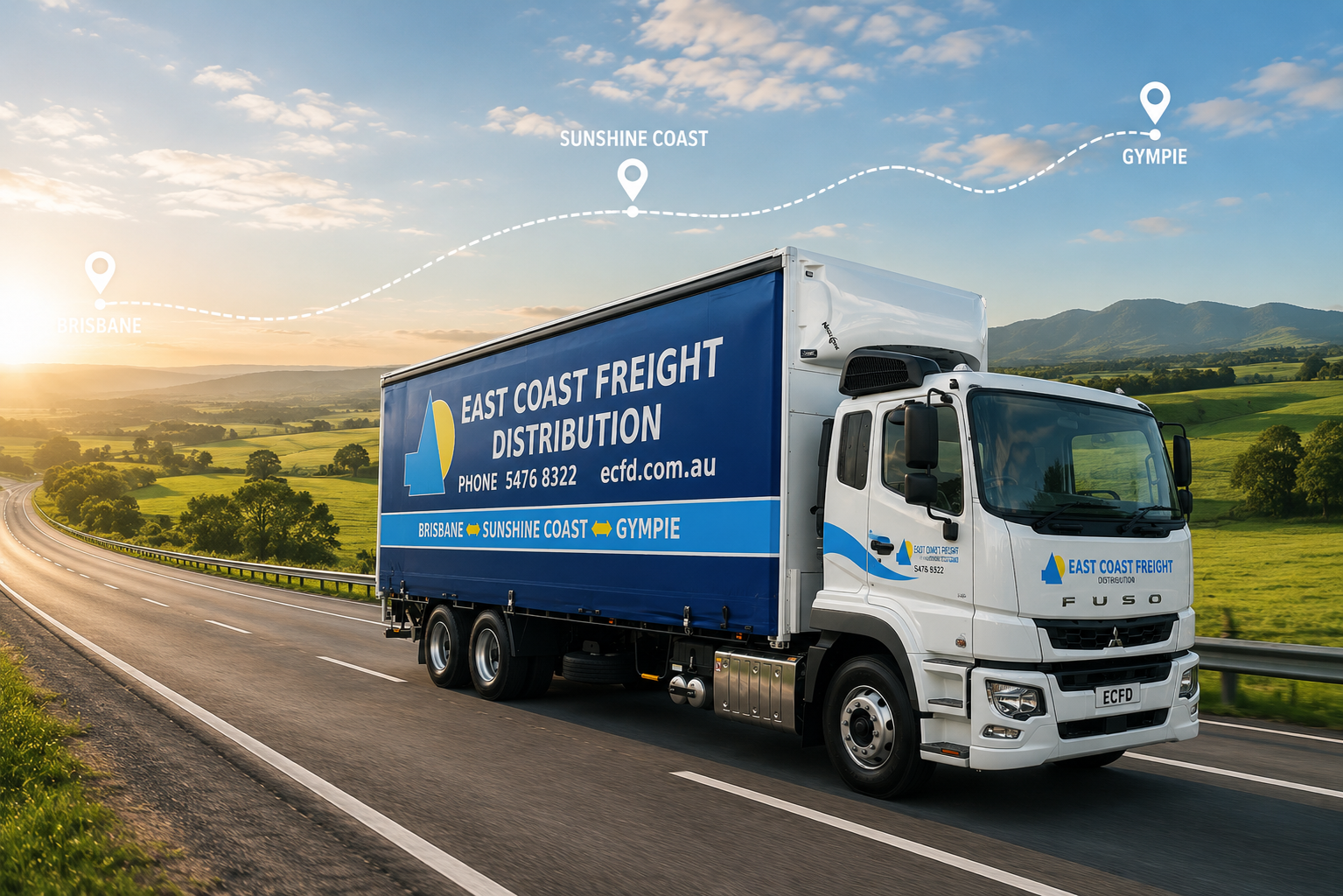
In Queensland’s expansive transport corridors, localized route knowledge—paired with advanced fleet management technology—allows dispatch teams to sequence collections and deliveries intelligently. By coordinating drop-offs and pickups within shared regional runs (such as the Brisbane–Caboolture–Sunshine Coast–Gympie corridor), transport providers significantly reduce overall fleet mileage.
Optimized route planning across regional distribution corridors can lower empty-truck transit by up to 15–20%, reducing fuel overheads while maintaining strict delivery deadlines.
Maximizing Load Capacity Through Freight Consolidation
A heavy vehicle traveling with unused cubic capacity still burns substantial fuel. Freight consolidation combines smaller consignments headed to the same region into a single shared vehicle run.
Key Benefits of Freight Consolidation
- Reduced Carbon Intensity: Fewer total vehicles on the road translates directly to lower aggregate greenhouse gas emissions per consignment.
- Cost Efficiency: Shippers avoid paying for dedicated transport when their volume only requires a portion of a vehicle.
- Optimized Network Flow: Higher fill rates reduce terminal congestion and streamline loading dock schedules.
Note: While urgent, temperature-sensitive, or specialized cargo may still require dedicated vehicles, combining standard pallets and general freight remains one of the fastest ways to cut logistics emissions.
Supporting Business Efficiency and Corporate ESG Goals
Adopting sustainable freight practices yields direct commercial advantages alongside environmental benefits. Environmental, Social, and Governance (ESG) criteria now influence procurement decisions for businesses of all sizes across Australia.
Selecting an environmentally conscious freight partner directly strengthens a business’s Scope 3 emissions profile (indirect supply chain emissions). Key commercial benefits include:
- Greater Supply Chain Transparency: Reliable data on route efficiency and load distribution aids annual ESG reporting.
- Improved Tender Eligibility: Helps businesses meet strict environmental criteria required for government projects and tier-one corporate contracts.
- Enhanced Operational Resilience: Highly organized, consolidated freight networks are fundamentally more resilient against fuel price volatility and supply chain disruptions. Learn more about how modern networks withstand transport disruptions in our guide on Resilient Freight Logistics in Australia.
Choosing the Right Sustainable Freight Partner
When reviewing transport suppliers, looking beyond price to evaluate operational efficiency is essential. Key questions to ask your logistics provider include:
- How are delivery routes planned and adjusted in real time?
- What processes are in place to prevent unutilized backhaul journeys?
- Can consignments be consolidated without compromising delivery windows?
- Does the provider offer tailored freight solutions based on specific consignment profiles?
At East Coast Freight Distribution, sustainable logistics is driven by practical improvements: intelligent route planning, maximized vehicle utilization, and clear communication.
Frequently Asked Questions
What is sustainable freight transport?
Sustainable freight transport focuses on moving goods across regional and interstate networks efficiently while reducing unnecessary fuel consumption, vehicle mileage, and carbon emissions without sacrificing service reliability.
How does route optimization reduce freight emissions?
Route optimization uses network data and regional traffic insights to plot the shortest, most efficient paths for transport vehicles. Cutting unnecessary kilometres directly decreases fuel consumption and greenhouse gas emissions.
What is the difference between dedicated and consolidated freight?
Dedicated freight utilizes an entire vehicle for a single customer or urgent consignment, whereas consolidated freight combines shipments from multiple customers traveling along the same transport corridor into one vehicle to maximize capacity.
How do sustainable logistics support Scope 3 ESG targets?
Scope 3 emissions include all indirect supply chain emissions. Working with a freight provider that optimizes routes and minimizes empty runs helps lower the carbon footprint associated with your business’s distribution network.