East Coast Freight Distribution

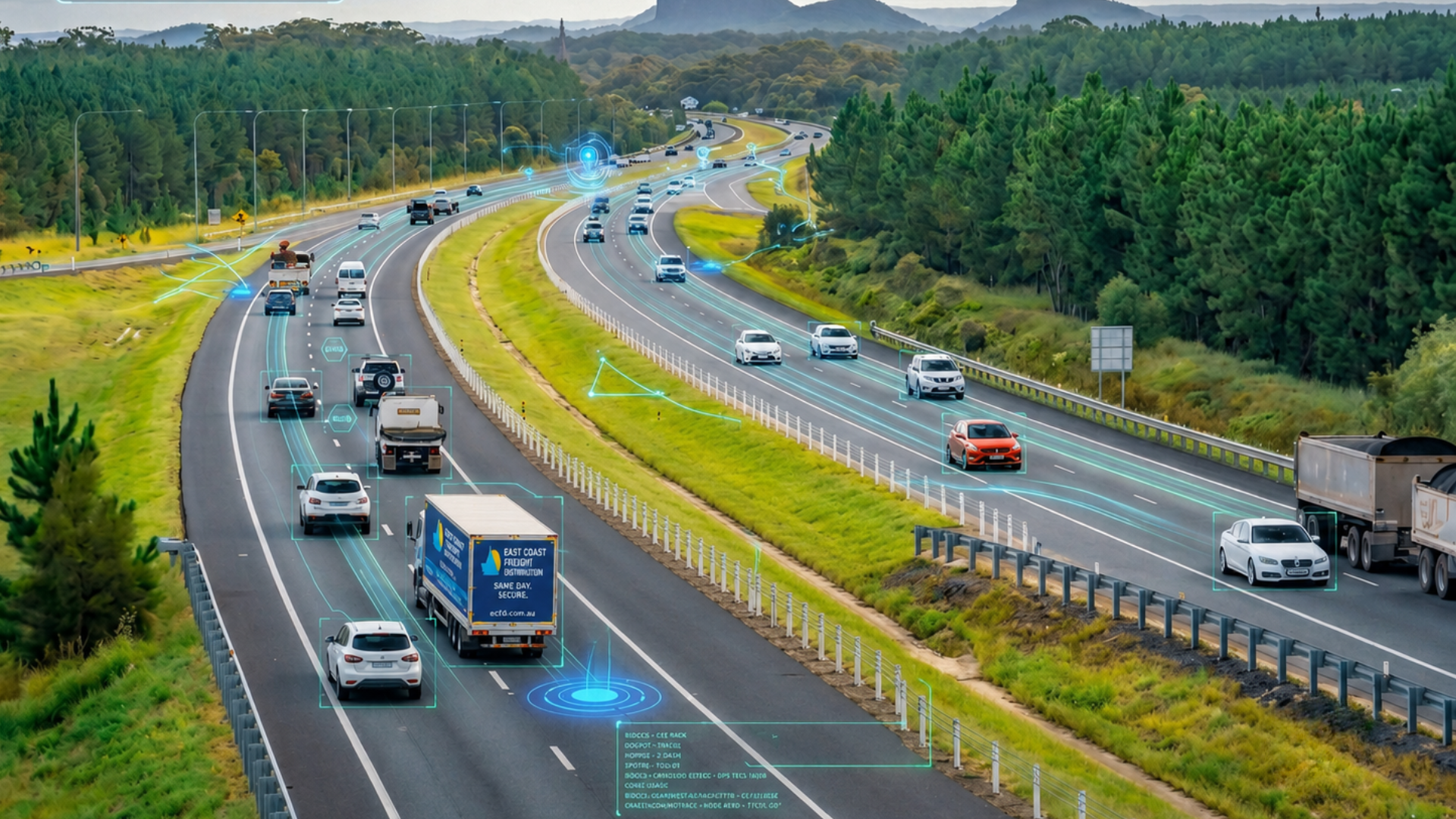
Algorithmic Efficiency on the Bruce Highway
Anyone who operates a business in Southeast Queensland knows the challenges of the Bruce Highway. It’s one of Australia’s most important freight corridors, connecting Brisbane, the Sunshine Coast and the growing communities in between.
It’s also one of the most congested. Traffic incidents, roadworks, holiday travellers, severe weather and population growth can quickly turn a well-planned delivery schedule into a logistical headache.
At East Coast Freight Distribution (ECFD), we don’t have the luxury of waiting for traffic to clear. Our customers depend on us to keep goods moving every day. That’s why we’ve invested heavily in technology, data and dynamic routing systems that allow us to make smarter decisions in real time.
The modern transport industry isn’t just about trucks anymore. It’s about information, visibility and algorithmic efficiency.
The Bruce Highway Challenge
The Brisbane to Sunshine Coast corridor has experienced significant population growth over the past decade. More people mean more vehicles on the road and increasing pressure on freight movements.
For transport operators, the challenges are considerable:
- Unpredictable congestion
- Delays caused by accidents and incidents
- Roadworks and infrastructure upgrades
- Seasonal traffic spikes during holidays
- Increased delivery expectations from customers
- Rising fuel and operating costs
A delay of just 20 minutes on the Bruce Highway can have a ripple effect across an entire delivery network. One missed delivery window can impact multiple customers, drivers and schedules throughout the day. This is where technology changes the game.
Why Static Route Planning No Longer Works
Traditional transport planning relied heavily on fixed delivery runs and driver experience. While experience remains incredibly valuable, today’s freight environment moves too quickly for static planning alone. The reality is that road conditions can change in minutes.
We use technology that continually evaluates what’s happening across our network and allows us to adapt quickly when conditions change. Instead of asking: “What’s the fastest route this morning?” We’re asking: “What’s the most efficient route right now?” That distinction matters.
Dynamic Routing Creates Resilient Supply Chains
Dynamic routing uses real-time data to continually optimise transport decisions. This includes analysing:
- Traffic conditions
- Delivery priorities
- Vehicle locations
- Driver availability
- Customer requirements
- Historical congestion patterns
- Weather conditions
- Service commitments
The result is a transport network that can adjust and respond as conditions evolve throughout the day. For our customers, this means greater reliability and better visibility.
Static Routing vs Dynamic Routing
Traditional Routing | Dynamic Routing |
Fixed delivery schedules | Continuously optimised schedules |
Reactive to disruptions | Proactive decision-making |
Relies heavily on historical knowledge | Uses live and historical data |
Increased risk of delays | Improved service reliability |
Higher fuel consumption | Better route efficiency |
Limited visibility | Greater transparency and tracking |
The difference isn’t simply technology for technology’s sake. It’s about creating a more resilient and responsive supply chain.
How AI Helps Us Navigate the Bruce Highway
Artificial intelligence is becoming an essential tool in modern logistics. AI can process thousands of data points far faster than any person can, which allows transport operators to:
- Predict congestion before it occurs
- Identify alternative routes
- Improve vehicle utilisation
- Reduce empty kilometres
- Better allocate resources
- Improve delivery performance
- Increase customer communication
At ECFD, we see AI as a support tool that empowers our people to make better decisions.
Technology doesn’t replace experience. It enhances it. Our operations team combines local knowledge with data-driven insights to ensure freight keeps moving even when the Bruce Highway throws up unexpected challenges.
The Value of Big Data in Freight Operations
Every delivery creates valuable information. Over time, this data helps us better understand:
- Peak congestion periods
- Seasonal traffic trends
- Customer delivery patterns
- Loading efficiencies
- Route performance
- Service reliability
This intelligence allows us to continually refine our operations and make better decisions for our customers. In transport, small improvements create significant gains. Saving a few minutes on multiple routes every day can lead to:
- Better customer service
- Reduced fuel consumption
- Lower operating costs
- Improved fleet productivity
- Greater network reliability
These efficiencies ultimately benefit the businesses that rely on us.
Why Reliability Matters More Than Speed
Many people assume transport is simply about getting goods from A to B as quickly as possible.
The reality is different. For most businesses, reliability matters more than speed. Knowing when your freight will arrive allows you to:
- Plan labour effectively
- Manage inventory levels
- Improve customer service
- Reduce costly disruptions
- Increase operational efficiency
This is why dynamic routing and intelligent transport systems have become so important. It’s not just about moving freight faster. It’s about moving freight smarter.
Building Future-Ready Supply Chains in Southeast Queensland
The Brisbane to Sunshine Coast corridor will continue to grow. Population forecasts, increased infrastructure investment and changing customer expectations mean transport operators need to become more agile and technologically capable than ever before. Businesses need logistics partners that can:
- Adapt quickly to disruption
- Provide real-time visibility
- Leverage technology effectively
- Scale with demand
- Deliver consistently despite changing conditions
At ECFD, we’ve built our operation around these principles because we know our customers depend on certainty. The Bruce Highway may always present challenges, but with the right combination of people, technology and data-driven decision-making, those challenges don’t need to become disruptions.
The Future of Freight Is Intelligent
Transport and logistics are entering a new era. Artificial intelligence, dynamic routing and algorithmic efficiency are no longer concepts of the future. They are practical tools helping businesses navigate increasingly complex supply chains today.
At East Coast Freight Distribution, we continue to invest in technology that improves visibility, efficiency and reliability across our network. Because when your business depends on freight moving between Brisbane and the Sunshine Coast, every minute matters. And in today’s transport environment, smarter decisions make all the difference.