East Coast Freight Distribution

Navigating The Chain of Responsibility (CoR)
Did you know your business could be legally responsible for heavy vehicle safety, even if you don’t own a truck? In the transport industry, compliance isn’t just a box to tick. It’s a responsibility that extends far beyond drivers sitting behind wheels.
As someone who has spent years working alongside businesses across Queensland, I’ve experienced how many organisations still believe that heavy vehicle compliance sits solely with the transport company or driver. Under Australia’s Heavy Vehicle National Law (HVNL), that’s not the case.
The Chain of Responsibility (CoR) legislation changed the game. It recognises that everyone involved in the transport supply chain can influence safety outcomes and, therefore, shares responsibility for ensuring heavy vehicles operate safely and legally.
Understanding your obligations isn’t just about avoiding penalties. It’s about protecting your people, your customers, your reputation, and your business.
What is Chain of Responsibility?
Chain of Responsibility laws are designed to improve safety and accountability across the transport industry. The legislation acknowledges that decisions made in offices, warehouses, and boardrooms can directly impact what happens on the road.
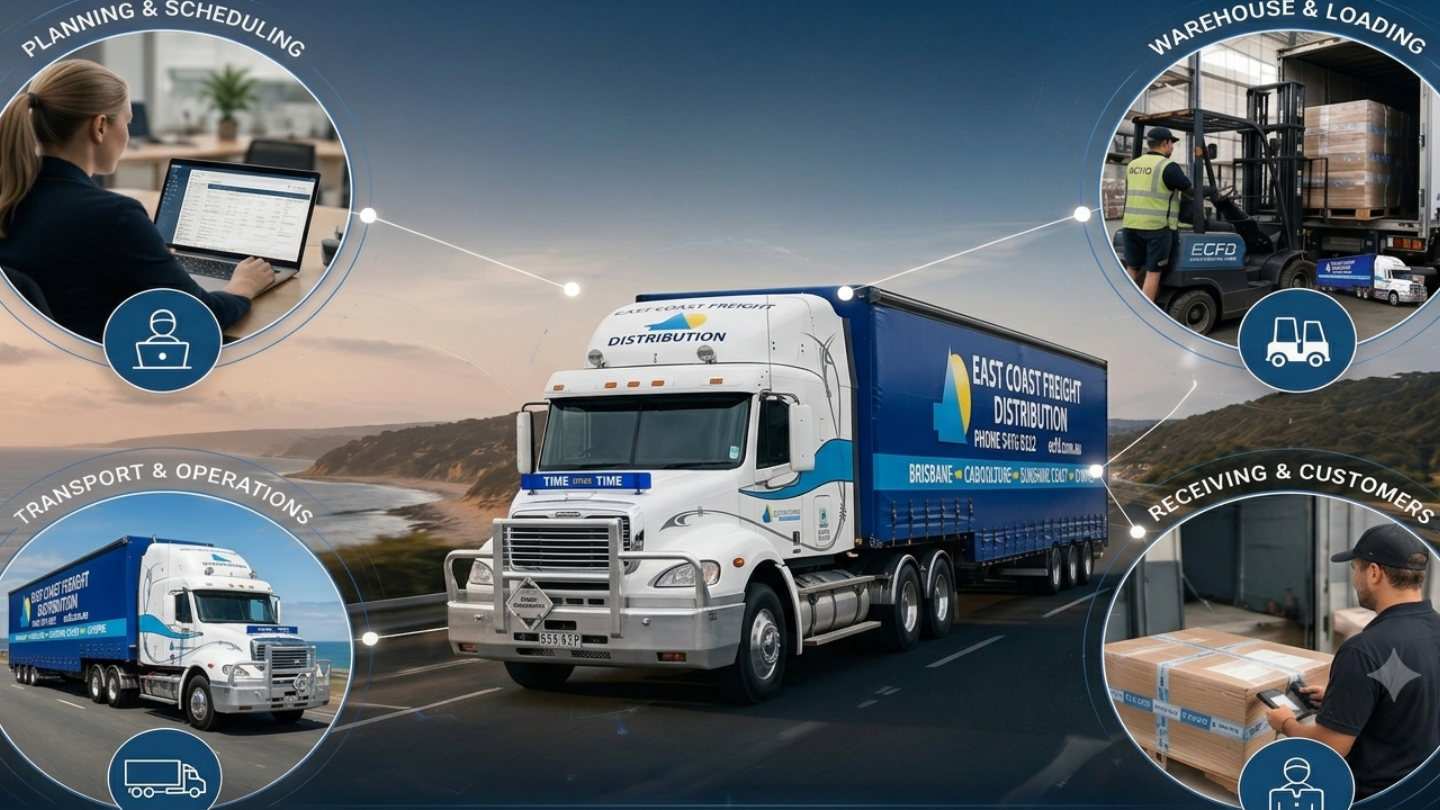
If you can influence transport activities, you likely have obligations under CoR.
- Business owners and company directors
- Employers and managers
- Consignors and consignees
- Schedulers and dispatchers
- Loaders and packers
- Freight forwarders and subcontractors
- Transport operators and drivers
In simple terms, if your actions or decisions can affect the safe operation of a heavy vehicle, you have a duty to ensure those activities are conducted safely.
The Primary Duty
The HVNL introduced a concept known as the “primary duty”. This means every party in the supply chain must, so far as is reasonably practicable, ensure the safety of transport activities. This includes managing risks relating to:
- Driver fatigue
- Speed compliance
- Vehicle maintenance
- Load restraint and mass limits
- Scheduling pressures
- Unsafe business practices
A common misconception is that outsourcing transport also outsources responsibility. It doesn’t. Even if you engage a third-party transport provider, your business may still have obligations if your decisions contribute to unsafe outcomes.
Where Businesses Can Get It Wrong
One of the biggest compliance issues we see is unrealistic expectations.
For example: A customer places a late order and expects same-day delivery hundreds of kilometres away. A warehouse delays loading, then requests the driver “make up time”. A business demands a fixed delivery window that can only be achieved by speeding or exceeding fatigue limits.
While these decisions may seem operational, they can create significant compliance risks under CoR legislation. The law is clear: commercial pressures should never compromise safety.
Understanding Executive Responsibility
For directors and senior leaders, compliance obligations extend even further. Executive officers have a positive duty to exercise due diligence to ensure their business complies with CoR requirements and this means leaders need to:
- Understand the risks associated with transport activities.
- Ensure appropriate policies and procedures are in place.
- Verify that systems are working effectively.
- Allocate resources to manage compliance obligations.
- Regularly review and improve safety practices.
Ignorance is not a defence. Increasingly, regulators are focusing on governance and holding executives accountable where failures occur.
A Practical Approach to CoR Compliance
The good news is that compliance doesn’t need to be complicated. The most effective businesses embed CoR into their everyday operations.
Here are my recommended five practical steps:
- Understand Your Role: Map your supply chain and identify where your business influences transport activities. You may have obligations even if you don’t own a single truck.
- Review Your Processes: Assess how orders are placed, freight is scheduled, and delivery expectations are communicated. Ask yourself: Could any of our processes encourage unsafe behaviour?
- Implement Policies and Training: Policies are only effective if people understand them. Ensure your teams are educated on CoR obligations and understand how their decisions can impact safety outcomes.
- Work With Compliant Transport Partners: Choose logistics providers that prioritise safety, compliance, and transparency. A strong transport partner should be able to demonstrate:
- Fatigue management processes
- Driver training programs
- Vehicle maintenance systems
- Compliance reporting capabilities
- Incident management procedures
- Regularly Review and Improve: Compliance is not a one-off exercise.
Regulations evolve, supply chains change, and new risks emerge. Businesses should regularly review their systems and make continuous improvements.
Why Compliance Matters More Than Ever
The transport industry is experiencing significant change. Increasing regulatory scrutiny, technology advancements, supply chain pressures, and evolving customer expectations are reshaping how freight moves around Australia.
At the same time, regulators continue to focus on improving road safety outcomes and reducing the number of incidents involving heavy vehicles. Businesses that proactively manage their CoR obligations are not only reducing legal risk—they’re building stronger, more resilient supply chains.
In today’s environment, safety and compliance are becoming competitive advantages.
Customers want to work with organisations they can trust. Employees want to work for businesses that value safety. And regulators expect businesses to take their obligations seriously.
The ECFD Approach
At East Coast Freight Distribution, we believe transport is about much more than moving freight from A to B. Every delivery is supported by systems, processes, and people committed to doing things the right way. Compliance isn’t an afterthought for us—it’s part of our culture.
We work closely with our customers to ensure freight movements are planned safely, expectations are realistic, and everyone understands their responsibilities within the supply chain.
Because at the end of the day, Chain of Responsibility isn’t just legislation. It’s about creating safer roads, stronger businesses, and better outcomes for everyone involved.
When businesses understand their obligations and work together, everybody wins.