East Coast Freight Distribution

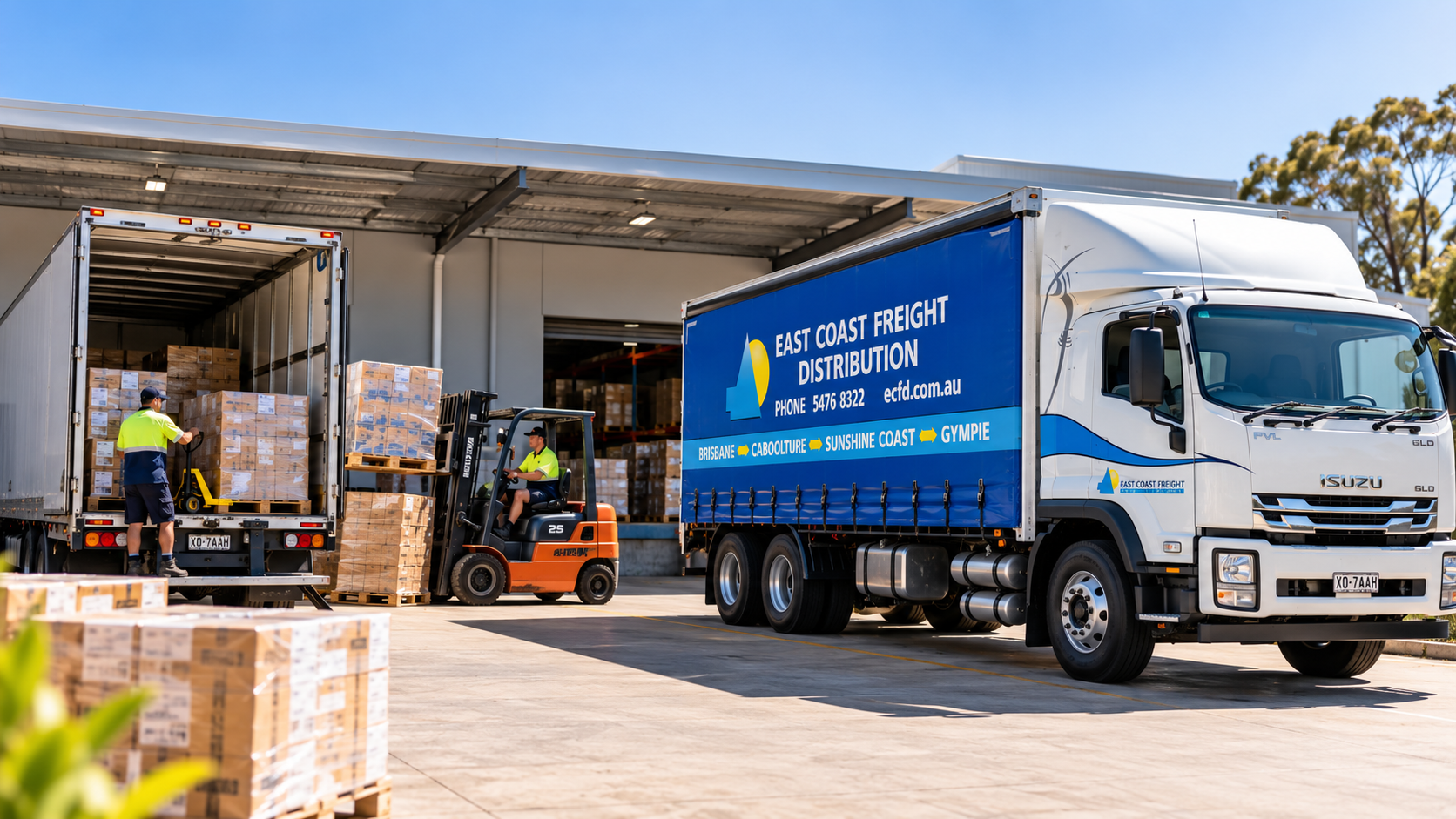
Need More Delivery Capacity? You May Not Need Another Truck
Business growth is a good problem to have. But it can quickly put pressure on your delivery fleet.
Your trucks may already be running at capacity. You might be delivering into new areas. easonal demand may suddenly increase. Or one unavailable driver can leave you trying to work out how you’re going to complete the day’s deliveries.
The obvious answer can seem to be: we need another truck.
But buying another vehicle also means taking on the cost and responsibility that comes with it.
For some businesses, the better solution is to increase transport capacity without increasing the size of their own fleet.
At East Coast Freight Distribution, we work with businesses that have their own vehicles but need additional transport support. That might mean overflow freight, project work or, where the volume justifies it, a dedicated truck and driver. The important thing is matching your transport model to the demand your business has.
The Problem with Adding Capacity Too Soon
A new truck gives you additional capacity. It also creates additional fixed costs and responsibilities. Depending on how you operate your fleet, these can include:
- Vehicle purchase or finance
- Registration and insurance
- Servicing and maintenance
- Driver recruitment
- Wages and employment costs
- Driver leaves and absences
- Compliance requirements
- Vehicle downtime
- Fleet administration
The bigger question is whether you need that extra capacity every day. If the answer is no, committing to another vehicle may leave you carrying additional fleet costs during quieter periods. That is where third-party transport can become another tool within your distribution strategy.
Five Signs Your Existing Fleet Needs More Support
1. Your Trucks Are Regularly at Capacity
Occasionally having a busy day is normal. Regularly running out of room is different. If your team is constantly rearranging deliveries, adding extra runs or pushing freight into the next day, your delivery demand may be exceeding your existing capacity.
Outsourcing some of that overflow can give you additional capacity without immediately expanding your fleet. Our general freight service, for example, supports both one-off and regular freight movements using vehicles ranging from smaller Utes through to semi-trailers.
2. Demand Changes Throughout the Year
Not every business has consistent delivery volumes. You may experience peaks around:
- Christmas and holiday periods
- Major promotions
- Construction cycles
- New product releases
- Events
- Seasonal production
- Customer projects
If you need another truck for three months of the year but not the other nine, purchasing another vehicle may not be the most efficient answer. A transport partner gives you another option. You can build additional capacity into your distribution model when you need it rather than maintaining that capacity all year.
3. You’re Expanding into New Delivery Areas
Growth can also change where you need to deliver. Perhaps your business has traditionally serviced the Sunshine Coast, but you’re receiving more orders from Brisbane. Or your Brisbane operation is developing a stronger customer base further north.
Before adding another vehicle and driver, it can make sense to test the demand. Third-party freight transport allows you to expand your delivery footprint without necessarily expanding your internal fleet at the same rate.
East Coast Freight Distribution already operates regular freight services across Brisbane, the Sunshine Coast and Gympie, with regional transport forming a core part of our operation. That existing network can help businesses extend their distribution capacity without having to build every route internally.
4. Driver Availability Is Affecting Deliveries
A truck isn’t much use without someone qualified to drive it. Driver availability can become just as important as vehicle availability when you’re running an internal fleet. Annual leave, illness, recruitment gaps or unexpected absences can quickly create pressure. This is one of the areas our Permanent Hire service is designed to address.
East Coast Freight Distribution can provide a dedicated truck and driver, with our team managing areas such as driver recruitment, payroll, vehicle management and replacements during downtime. It means businesses can access dedicated delivery capacity without having to manage every element themselves.
5. You’re Spending Too Much Time Managing Transport
There is also a less obvious cost to fleet growth: management time. As the fleet gets bigger, so does the job of managing it. Someone has to coordinate:
- Drivers
- Rosters
- Maintenance
- Compliance
- Vehicle availability
- Delivery schedules
- Unexpected breakdowns
- Replacement vehicles
At some point, ask whether owning and managing more trucks is where your business should be investing its resources.
Should You Buy Another Truck or Outsource Transport?
There isn’t one correct answer. If you have predictable, consistent delivery volume and the resources to manage another vehicle and driver, owning another truck may make commercial sense. If demand fluctuates, you’re still testing growth or you simply don’t want another vehicle on the balance sheet, outsourced transport provides another option. The right model may also be a combination of all three.
Consideration | Add Your Own Truck | Third-Party Transport | Dedicated Truck & Driver |
Capital required | Higher | Lower | No vehicle purchase |
Best for | Consistent demand | Variable/overflow demand | Regular dedicated demand |
Driver management | Your responsibility | Provider | Provider |
Vehicle maintenance | Your responsibility | Provider | Provider |
Seasonal flexibility | Lower | Higher | Depends on arrangement |
Control over deliveries | High | Shared | High |
Branding opportunity | Your branding | Provider branding | Custom branding available |
Fleet administration | Your team | Provider | Provider |
Your Transport Partner Doesn’t Have to Replace Your Fleet
Outsourcing transport doesn’t necessarily mean outsourcing your entire distribution operation.
For many businesses, a third-party transport provider simply complements the fleet they already have.
Your own trucks might handle predictable daily routes while your transport partner takes care of:
- Overflow freight
- Regional deliveries
- Peak periods
- Special projects
- Large or unusual loads
- Deliveries requiring different vehicle types
- Additional capacity during driver shortages
KickAss is a good example of this in practice. As its retail network expanded across South-East Queensland, ECFD supported the business with major warehouse moves. KickAss told us that flexibility and meeting tight delivery timelines were particularly important during its expansion. With its store network growing, the business also began considering an ECFD permanent hire truck to provide greater control over drivers, delivery times and stock replenishment.
Rather than needing to permanently increase its own fleet to accommodate periods of expansion and project-specific demand, KickAss can bring in additional transport capacity as and where it is needed.
You can read more about our work with KickAss. It creates a more flexible model where your internal fleet handles your base demand and external capacity can help absorb growth, projects and fluctuations.
How ECFD Can Add Capacity
We don’t believe every transport problem needs the same solution. East Coast Freight Distribution has a diverse fleet including articulated, heavy-duty and medium-duty trucks, with flatbeds, drop decks, tautliners, curtain-side vehicles, tailgate lifters and mobile forklift capability. Depending on your requirements, we can support your existing operation through:
- General freight for one-off and regular deliveries.
- Project logistics for short-term or specialised requirements.
- Permanent hire for dedicated truck and driver capacity.
- Mobile forklift transport where unloading equipment is required.
- Refrigerated transport for temperature-sensitive freight.
Add Capacity Before You Add Complexity
I’ve seen businesses grow to the point where transport starts becoming a much bigger part of their day-to-day operation than they expected. That’s usually the time to look at the bigger picture.
If your existing fleet is struggling to keep up, another truck may absolutely be the right investment.
But it isn’t the only answer.
Sometimes you need another truck every day.
Sometimes you need one two days a week.
Sometimes you simply need someone you can call when your own fleet can’t cover the work.
At East Coast Freight Distribution, we can look at your delivery requirements, existing fleet and changing demand and help determine a practical transport solution. Because increasing your delivery capacity doesn’t necessarily mean increasing the size of your fleet.
Frequently Asked Questions
1. Can I use East Coast Freight Distribution for overflow deliveries while keeping my own fleet?
Yes. You don’t need to outsource your entire transport operation. We can provide additional freight capacity to complement your existing vehicles when delivery volumes exceed what your own fleet can comfortably handle.
2. Is outsourced transport suitable for seasonal delivery demand?
It can be particularly useful where demand changes throughout the year. Rather than maintaining additional internal fleet capacity during quieter periods, businesses can use third-party transport to help manage peak delivery periods.
3. What is the difference between general freight and permanent hire?
General freight is suitable for one-off, overflow and regular freight movements that don’t require a vehicle exclusively dedicated to your business. Permanent hire provides a dedicated truck and driver operating around your specific delivery requirements.
4. Can a dedicated hire truck carry our company branding?
Yes. East Coast Freight Distribution offers custom branding options for permanent hire arrangements, including vehicle signwriting with your company’s branding and uniformed drivers where required.
5. How do I know whether to buy another truck or outsource additional deliveries?
Start by looking at how frequently you need the additional capacity. If demand is consistent and predictable every day, adding your own vehicle may make sense. If demand fluctuates, is seasonal or you’re still testing a new delivery area, third-party transport can provide greater flexibility. If additional demand becomes regular but you don’t want the cost and management of another vehicle and driver, dedicated permanent hire may provide the middle ground.