East Coast Freight Distribution

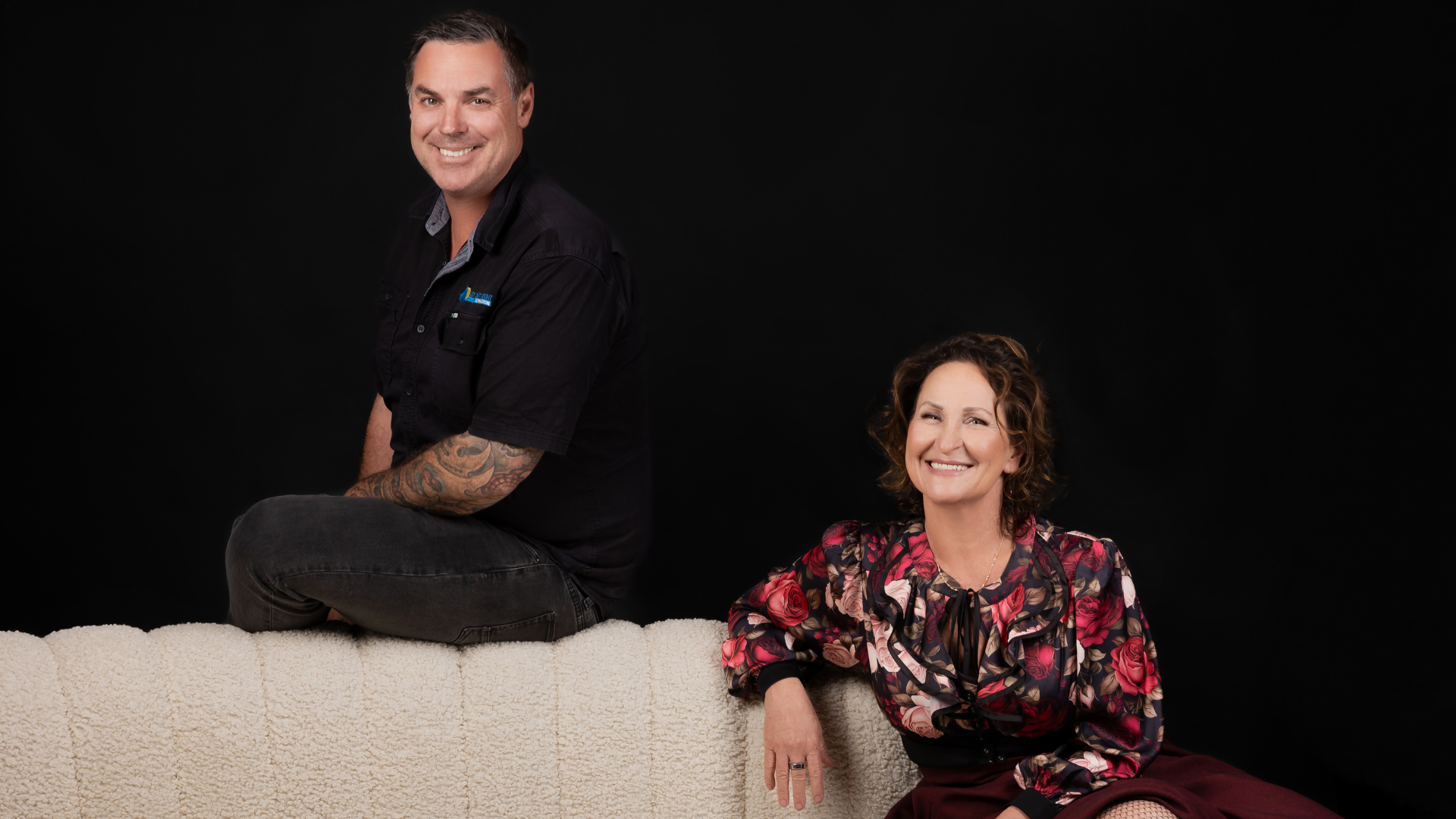
From Blue Singlets to Bigger Purpose: A Conversation with Shelly Barber on 30 Years of Growth
As ECFD‘s Executive Director, Shelly Barber, celebrates a milestone birthday this month, I sat down with her to explore the unconventional path that led her from a small transport depot on the Sunshine Coast to leading one of Australia’s premier supply chain solutions providers—and beyond.
Tim: Shelly, you grew up in your family’s transport business in Brisbane. What was it like being immersed in that world from such a young age?
Shelly: It was my education before I knew I needed one. I started as the coffee-maker—literally the lowest rung—then worked my way through secretary roles, into fleet control. Transport was in my blood, but I didn’t fully appreciate what I was learning at the time. Every role taught me something: attention to detail, the importance of systems, how to communicate with drivers, mechanics, customers. It was hands-on business school, though I certainly didn’t have the grades to prove it back then!
Tim: Then you moved to the Sunshine Coast to manage operations. By all accounts, that was a baptism by fire?
Shelly: That’s putting it mildly. I walked into what I can only describe as the old-time transport industry—the blue singlet brigade. Greasy. Tough as nuts. I was this Brisbane girl who thought I knew the business, and suddenly I’m in an environment where being female was seen as a liability. The workplace culture was toxic in ways we’d never tolerate today. There was abuse, corner-cutting, a real “this is how we’ve always done it” mentality.
Tim: How did you survive that? Many people would have walked away.
Shelly: I almost did. But something in me refused to accept failure. Instead of running, I decided to re-engineer myself. I hired mentors, took every business and marketing course I could find, read everything. I studied Jack Welch, absorbed his ruthless efficiency approach. And honestly? I built this hard, masculine persona because I thought that’s what the situation demanded. I had to become someone they couldn’t dismiss.
Tim: You’ve described your early management style as “ruthless.” What did that look like in practice?
Shelly: I went in and said, all of this is abuse. You’re out. I sacked people—regardless of age, commitments, or family circumstances. I interviewed new candidates across a cold desk, deliberately. I needed to send a message that things had fundamentally changed. Looking back, it was brutal. But that business was dying, and sometimes you need to cut away the rot before you can heal.
Tim: But your approach evolved significantly. What changed?
Shelly: As I learned more about business, I discovered different heroes. Reading about Richard Branson was transformative. I realised people could be developed, invested in—that you could build a thriving business culture without ruling through fear. That’s when I started reconnecting with my feminine self, the parts I’d buried to survive in that masculine environment. I learned you could be strong and compassionate, demanding and nurturing. The best leaders are.
Tim: After a decade in transport management, you made an unexpected pivot to university. What prompted that?
Shelly: I’d achieved what I set out to achieve in transport. We’d turned the business around, built something sustainable. But something was missing. Developing people and providing jobs is noble, absolutely, but I wanted higher purpose. I wanted to contribute to something world-changing, something that would help us navigate the challenges ahead. So I enrolled to study sustainability and international business.
Tim: You’ve excelled academically—14 High Distinctions, four Distinctions, never below that. How did you approach academia so successfully?
Shelly: I treated it like any other business project—jumped in fully. Because I was unfamiliar with the academic world, I attended every skills workshop available. For each course, I asked myself: what do they want us to know? I searched for core principles and plugged them into frameworks I’d learned. I’d absorb information, let it ferment in my mind. When I finally sat down to write, the work flowed. It’s the same systematic approach I’d used in business, just applied to a different context.
Tim: You’ve also taken on a role as CEO of Spirit Hive. Tell us about that journey.
Shelly: I visited an old friend, Carren, who has an extraordinary story. In 2001, her fiancé passed and a year later, she was seriously injured in the Bali bombing, and her two travelling companions were killed. Despite—or perhaps because of—these traumas, Carren launched Spirit Hive in 2018. It’s a registered charity dedicated to preventing suicide, depression, and anxiety. They offer local Live ‘Hives’ for families, Youth Leadership Programs, live music, and free crisis counselling Australia-wide, with plans to expand worldwide.
When I learned about Spirit Hive, I discovered a purpose with real meat on the bone. Here was something that combined everything I’d learned—business management, systems thinking, people development, sustainability—in service of something genuinely world-changing.
Tim: As you reflect on the past 30 years at ECFD, what’s the thread that connects that young coffee-maker to the Executive Leader you are today?
Shelly: Reinvention. Every phase of my life has required me to become someone new while holding onto the core of who I am. I’ve learned that growth isn’t comfortable—it requires shedding old skins, adopting new perspectives, being willing to admit what you don’t know and then systematically learning it.
The scared Brisbane girl who walked into that Sunshine Coast depot had to become tough to survive. The ruthless manager had to soften to truly lead. The business veteran had to become a student again. And now, everything—the transport years, the degrees, the management experience—it all converges into being Executive Director of the East Coast Freight Group of Companies.
Tim: What advice would you give to someone facing their own seemingly impossible challenge?
Shelly: Don’t run from the hard thing. Run toward it, but be smart about it. Get the knowledge you need. Find mentors. Be willing to completely transform your approach when you discover a better way. And remember: the qualities you think you need to abandon to succeed—your compassion, your values, your authentic self—those are often your greatest assets. It just might take time to figure out how to lead with them.
The transport industry taught me systems and resilience. University taught me how to think critically and see the bigger picture. But life taught me that the most important business we’re in is the business of being human—and helping others through their darkest moments might be the most important work of all.
Tim: Looking ahead, what’s next for Shelly Barber?
Shelly: With two degrees, three decades of business experience, and a sense of purpose I’ve never had before to throw at it, turning sixty is my launching pad. Ask me again at seventy where we’ve gotten to. I think you’ll be impressed.