East Coast Freight Distribution

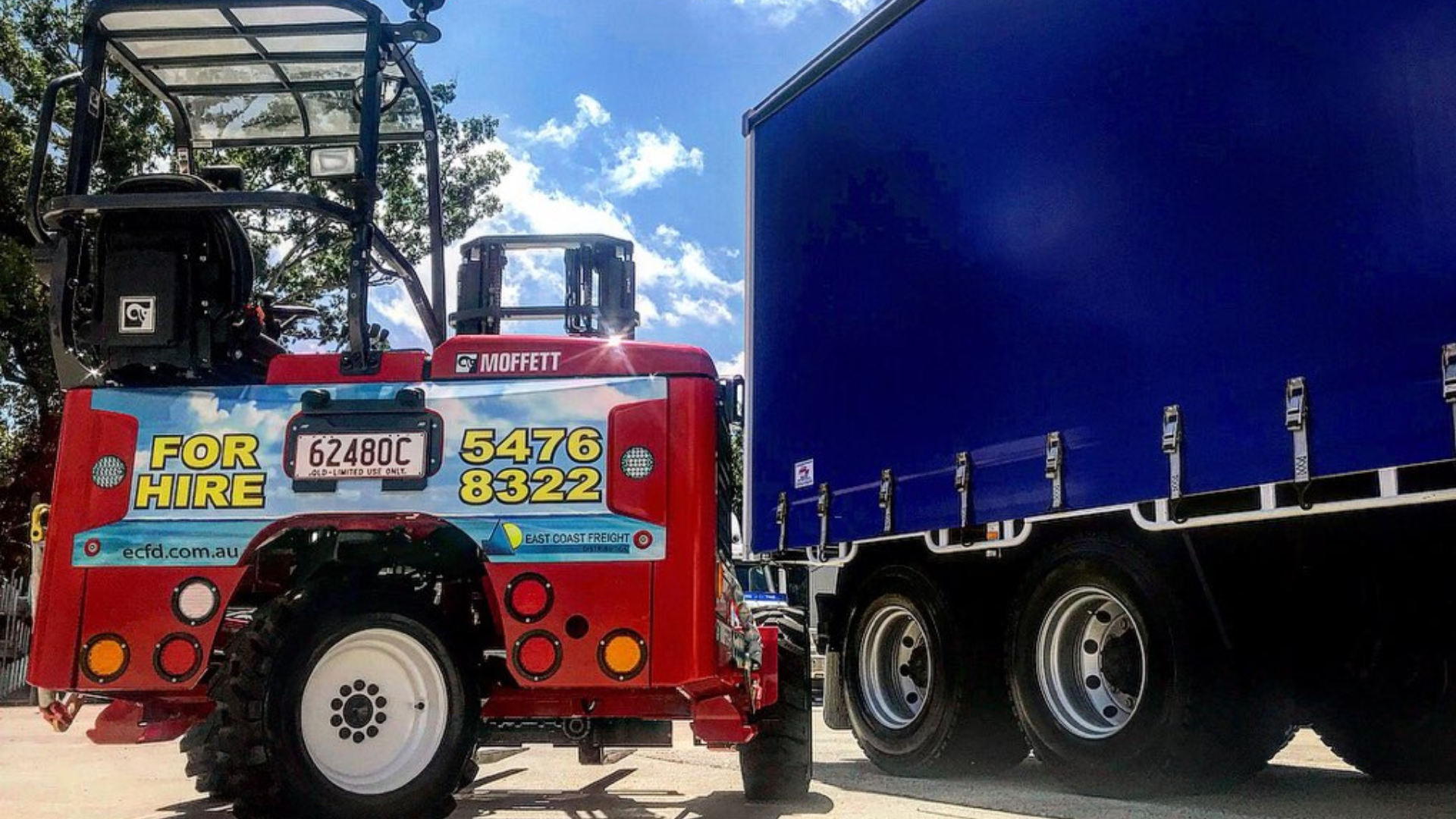
When Does Your Job Site Need a Mobile Forklift Delivery Service?
Getting freight to a job site is only half the job. The other half is getting it safely off the truck and where it needs to go.
At a warehouse or distribution centre, that’s usually straightforward. There are loading docks, forklifts and people ready to receive the delivery. But construction sites, regional properties, event venues and temporary work sites can be a very different story.
At East Coast Freight Distribution, we regularly deliver to locations where traditional unloading equipment simply isn’t available. That’s where a mobile forklift delivery service can make a real difference.
By bringing the unloading equipment with the delivery, we can help businesses avoid organising separate equipment hire, reduce delays and make deliveries to challenging locations considerably easier.
What Is a Mobile Forklift Delivery Service?
A mobile forklift delivery service combines freight transport with the ability to unload freight at the destination.
Rather than arriving at a site and relying on the customer to have a forklift available, the truck carries a mobile forklift that can be used to unload suitable palletised, heavy or awkward freight once it arrives.
For businesses receiving freight at locations without permanent unloading infrastructure, it’s a practical way to coordinate transport and unloading as part of the same delivery.
When Standard Freight Delivery Isn’t Enough
Not every delivery is going from warehouse to warehouse. We deliver freight to all sorts of locations, and many don’t have a loading dock or forklift sitting there waiting for the truck to arrive.
Mobile forklift delivery can be particularly useful for the following situations:
- Construction and building sites
- Regional businesses and properties
- Farms and rural locations
- Event and temporary sites
- Landscaping and outdoor projects
- Commercial premises without loading facilities
- Sites receiving palletised or bulky freight
If a truck arrives with a heavy pallet and there’s no suitable way to unload it, you can quickly end up with delays, additional costs or a delivery that can’t be completed as planned. Planning the unloading method before the truck leaves helps avoid those problems.
Why Bring the Forklift with the Freight?
One of the biggest advantages is simplicity. If you know your delivery location doesn’t have suitable unloading equipment, you could arrange to hire a forklift separately. But that means coordinating another supplier, another arrival time and another cost.
If the equipment is late and the truck is waiting, the entire delivery schedule can be affected.
With a mobile forklift travelling as part of the freight delivery, transport and unloading can be coordinated together.
For our customers, that can mean:
- Less reliance on third-party equipment hire
- Reduced waiting and unloading time
- Fewer moving parts to coordinate
- More efficient delivery to sites without loading infrastructure
- Less unnecessary handling of freight
- Reduced risk of damage during unloading
Sometimes the best freight solution isn’t simply choosing the right truck. It’s thinking about what happens when that truck reaches its destination.
Reducing Unnecessary Freight Handling
Every additional time freight is moved creates another opportunity for something to go wrong. If goods need to be transferred between vehicles, temporarily stored or handled multiple times because the final site isn’t equipped to unload them, it can add time, cost and complexity to the delivery.
Where suitable, a mobile forklift allows freight to be transported to its destination and unloaded directly on site. This can reduce unnecessary handling, help protect the load and make the overall delivery process more efficient.
For businesses, that efficiency can have a flow-on effect. Less time spent coordinating equipment, waiting for unloading or dealing with damaged goods means fewer disruptions and a smoother day-to-day operation.
It’s a relatively simple transport solution, but one that can make a real difference to both delivery efficiency and overall business performance.
Mobile Forklifts for Construction Site Deliveries
Construction sites are a good example of where mobile forklift delivery can be particularly useful. Sites are constantly changing. Access can be restricted, permanent infrastructure may not yet exist and the equipment available one week may not be there the next.
Deliveries can include pallets of materials, equipment and other bulky items that can’t simply be unloaded by hand. Having the unloading requirements organised as part of the transport means the site manager doesn’t have to find a separate forklift every time suitable freight arrives.
It also allows us to plan the delivery around the realities of the site rather than assuming it operates like a warehouse.
Regional and Rural Deliveries
The same applies to regional and rural locations. A regional business or property may have plenty of space but no permanent forklift or loading dock. Hiring equipment specifically for a delivery may also be less practical when the nearest hire provider is some distance away.
At East Coast Freight Distribution, our experience across Queensland means we understand that regional freight requires more than simply calculating the kilometres between collection and delivery.
We consider the route, site access and unloading requirements so the delivery can be planned properly before the truck arrives. That practical preparation can save a lot of frustration at the other end.
Event and Temporary Site Deliveries
Events logistics present another set of challenges. Deliveries may need to arrive within a specific access window, venues can have strict vehicle requirements, and temporary sites often have little or no permanent unloading infrastructure.
Whether it’s palletised event supplies, equipment or other bulky freight, coordinating transport with mobile forklift unloading can help keep bump-in schedules moving.
When several suppliers and contractors are working within the same timeframe, avoiding an extra equipment booking is one less thing for the event team to manage.
Preparing Your Site for a Mobile Forklift Delivery
Even when we’re bringing the unloading equipment, there are a few things worth checking before delivery day.
Mobile Forklift Delivery Site Checklist
- Check vehicle access: Is there enough room for the delivery vehicle to safely enter, manoeuvre and leave the site?
- Consider the ground conditions: Is the unloading area suitable for the mobile forklift?
- Check overhead clearance: Look for powerlines, trees, structures or other potential obstructions.
- Confirm the freight details: Make sure dimensions, weight, pallet configuration and any unusual handling requirements are known beforehand.
- Identify the unloading location: Decide where the freight needs to be placed before the delivery arrives.
- Check site restrictions: Confirm access times, gates, inductions or other site requirements.
- Nominate a site contact: Have someone available who understands where the freight needs to go.
- Communicate unusual conditions early: Restricted access, steep areas or difficult surfaces are much easier to plan around when we know about them in advance.
The more information we have before delivery, the better we can plan the right transport and unloading solution.
Good Freight Delivery Starts with Good Planning
I’ve always believed that reliable transport comes down to understanding the entire delivery: Where is it going? What’s the access like? Who will be there? How will it be unloaded? And what equipment will be needed when we arrive?
At East Coast Freight Distribution, our team combines practical transport experience with strong knowledge of Queensland routes and delivery conditions. We use that experience, together with technology that helps us plan and coordinate freight movements efficiently across the areas we service.
For sites without their own unloading infrastructure, a mobile forklift delivery service can remove one of the biggest headaches from the delivery process. Because a successful delivery shouldn’t end with a truck arriving at the gate. It should end with your freight safely unloaded where it needs to be.
Need Freight Delivered to a Site Without a Forklift?
If you’re organising a delivery to a construction site, regional property, event venue or commercial location without suitable unloading equipment, talk to our team before you book separate equipment. We’ll look at the freight, access and unloading requirements and help determine the most practical way to get it delivered.
Frequently Asked Questions
What is a mobile forklift delivery service?
A mobile forklift delivery service combines freight transport with on-site unloading capability. The mobile forklift travels with the delivery vehicle and can be used to unload suitable freight at destinations where a forklift or loading dock isn’t available.
Can freight be delivered to a site without a forklift?
Yes. Depending on the freight and site conditions, a mobile forklift delivery service can allow suitable freight to be delivered and unloaded at locations without their own forklift or permanent unloading facilities.
When should I request a mobile forklift for a delivery?
Consider mobile forklift delivery when you’re receiving heavy, bulky or palletised freight at a location without suitable unloading equipment. It’s particularly useful for construction sites, regional properties, event venues and commercial sites without loading docks.
Does a mobile forklift save the cost of hiring a separate forklift?
It can remove the need to organise a separate forklift hire specifically for the delivery. This can also reduce the time and coordination involved in trying to make a separately hired forklift and freight vehicle arrive at the same time.
What information should I provide before a mobile forklift delivery?
Provide details about the freight’s dimensions and weight, site access, ground conditions, overhead restrictions, preferred unloading location and any specific site requirements. This helps us determine the most appropriate transport and unloading approach before delivery day.